Delivery of parcels and belongings to Russia from abroad with travellers
Sanctions have closed the direct route for parcels from many countries.

Sanctions have closed the direct route for parcels from many countries.
International courier services have suspended operations, and foreign shops have stopped shipping orders to Russian addresses. Yet you can still get the item you need from abroad — through travellers who are flying the right route and are happy to carry it in their personal luggage.
This logistics model existed long before the sanctions: people asked friends to bring something back from a trip. Today it has grown into a fully fledged service, with platforms that connect senders and travellers all over the world.
Parcel delivery to Russia is simpler than it seems. The sender posts a request on the platform, stating what needs to be carried, from where and to where. The system finds travellers on a suitable flight — from the right city or country to Russia.
When a traveller responds, both sides agree on the details: the place and time of the parcel handover, the packaging and the reward. The traveller puts the item in their personal luggage and carries it as their own belonging. After landing, they hand it to the recipient in person or via an agreed method of delivery.
The key difference from courier delivery is that there are no logistics companies acting as middlemen, no queues for customs clearance of commercial cargo and no standard waiting times. Speed depends on how often flights run on the route you need.
Travellers carry items intended for personal use. This is the main condition: the item must not look like a commercial consignment.
The most common items:
from foreign shops
bags, jewellery, watches
smartphones, headphones, smartwatches.
Travellers usually don't take bulky cargo — weight and volume in personal luggage are limited. Most often people choose a box or bag that fits into a suitcase or hand luggage.
Since 2022, hundreds of foreign retailers have switched off delivery of goods from abroad to Russia. ASOS, Zara, Farfetch and many American and European brands — their websites still work and the products are available, but you can't place an order to a Russian address.
Travellers fill this gap. Here's how it works: a buyer in Russia finds the item they want on a foreign website, but instead of their own address they enter a delivery address in the country of departure — for example, the traveller's address or a nearby pickup point. The traveller receives the parcel, collects it and brings it to Russia.
This option is especially popular for branded items, cosmetics, electronics and goods that are either unavailable in Russia or sold there at a much higher price. Delivery via a traveller often works out cheaper than buying an equivalent on the Russian market.
Bear in mind: the sender should check with the traveller in advance whether they are willing to receive the parcel at their address abroad. Not everyone agrees — it takes extra time and effort.
Delivery from abroad involves several consecutive steps, and it's important not to rush any of them.
Place an order in a foreign shop to the traveller's address or to a delivery address in the country of departure. Before that, be sure to agree the details with the traveller: they must confirm they are ready to receive the parcel.
Agree how the traveller will pack the item, when they fly and how they will hand over the parcel in Russia. Settle the reward — it depends on the weight, dimensions and route.
The traveller collects the item, packs it in their luggage and flies to Russia. At this stage the sender and recipient can track the status on the platform or message the traveller directly.
After landing, the traveller hands the parcel to the recipient — in person, via a courier or at an agreed location. The system records the receipt on the platform, after which the traveller gets their reward.
Sending items through a traveller is a legal way to deliver, but it requires compliance with customs rules. Ignoring the restrictions creates risks for both the traveller and the sender.
You are carrying items as a traveller's personal luggage. This means they must look like items for personal use, not a commercial consignment. Customs assesses the quantity, type and value of the items.
Items must comply with the duty-free import rules in force at the time of travel. Russia has limits on value and weight: exceeding these thresholds means paying duty. The exact figures are revised from time to time, so before sending it's worth checking the current rules on the Federal Customs Service website.
The sender must take the restrictions into account and tell the traveller about the parcel's contents in advance. Some categories of goods — alcohol, tobacco, medicines, certain types of electronics — are subject to separate rules. The traveller has the right to refuse to carry anything they have doubts about.
Labelling is a separate point. If an item was bought in a shop and packed in a branded box, it must not give the impression of a commercial consignment. Several identical boxes in luggage may attract attention at customs control.
Both options solve the same problem — getting an item from abroad to Russia. But they differ significantly in cost, speed and paperwork.
| Criterion | Traveller | Courier delivery |
|---|---|---|
| Price | Lower. | Higher. |
| Speed | Depends on the next flight. | The carrier's standard delivery times. |
| Customs clearance | Personal luggage, no cargo declaration. | The shipment must be cleared. |
| Receipt | In person from the traveller. | Courier or pickup point. |
| Route availability | Depends on travellers being available. | Limited by sanctions and routes. |
| Liability | Based on the platform and agreements. | Governed by the contract with the carrier. |
Courier delivery is more convenient when you need documented liability and a standardised process. Delivery via a traveller wins on price and speed, especially if the route is popular and travellers fly it often.
For routes where courier services don't operate at all, a traveller is the only real option for delivering goods from abroad to Russia.
There is no single rate — the cost is made up of several factors.
Flights from popular hubs — Dubai, Istanbul, Yerevan — cost less because there are far more travellers on these routes. Rare routes, for example from Latin America or Southeast Asia, cost more because there is less competition among travellers.
A small box that fits in hand luggage will cost less than a parcel that takes up part of a checked bag. Travellers consider not only the weight but also how convenient the parcel is to carry.
If you need delivery by a specific date, the choice of travellers narrows and the fee may be higher. Flexibility on timing lets you find a better deal.
The final cost of delivery to Russia is the traveller's reward plus the platform fee. As a rule, this option remains cheaper than the alternative delivery methods available given the restrictions on direct shipping to Russia.
Yes, if the item is allowed to be imported and is intended for personal use. It's important to agree in advance with the traveller whether they are willing to receive the parcel at their address abroad or collect it from a pickup point.
Yes. Duty-free import limits depend on the customs rules in force and change from time to time. Before sending, check the current value and weight rules on the official resources of the Federal Customs Service of Russia.
Yes, as long as they don't form a commercial consignment. Several small items intended for personal use are acceptable. However, the decision is the traveller's: they assess the total weight, volume and risks of going through customs control.
ID verification, escrow payment, user ratings and photo records of every step — four mechanisms that make a deal safe and predictable.
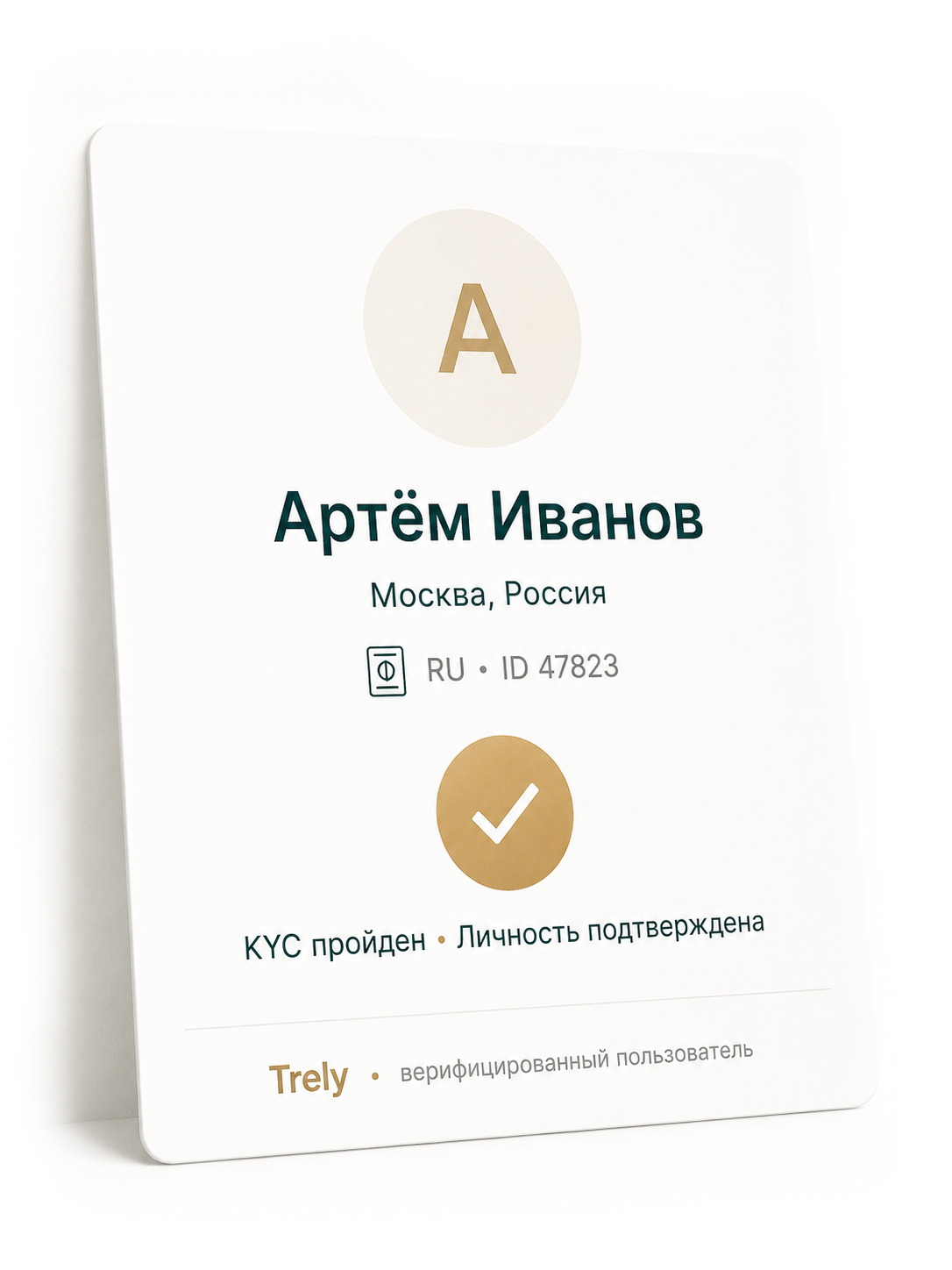
Every user passes a document check and face verification. We have no anonymous profiles.
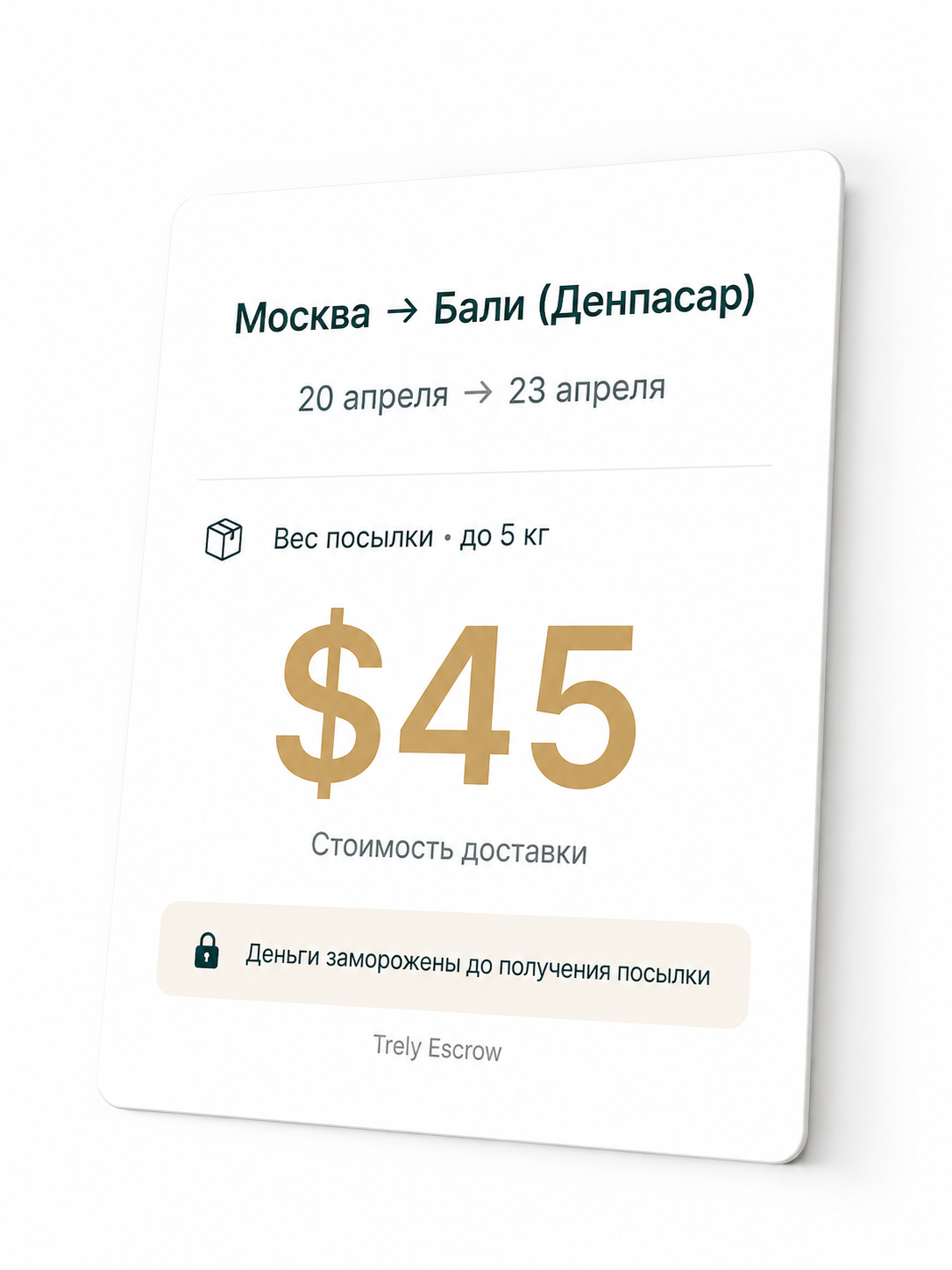
The sender's money is held by Trely and released to the traveller only after delivery is confirmed.
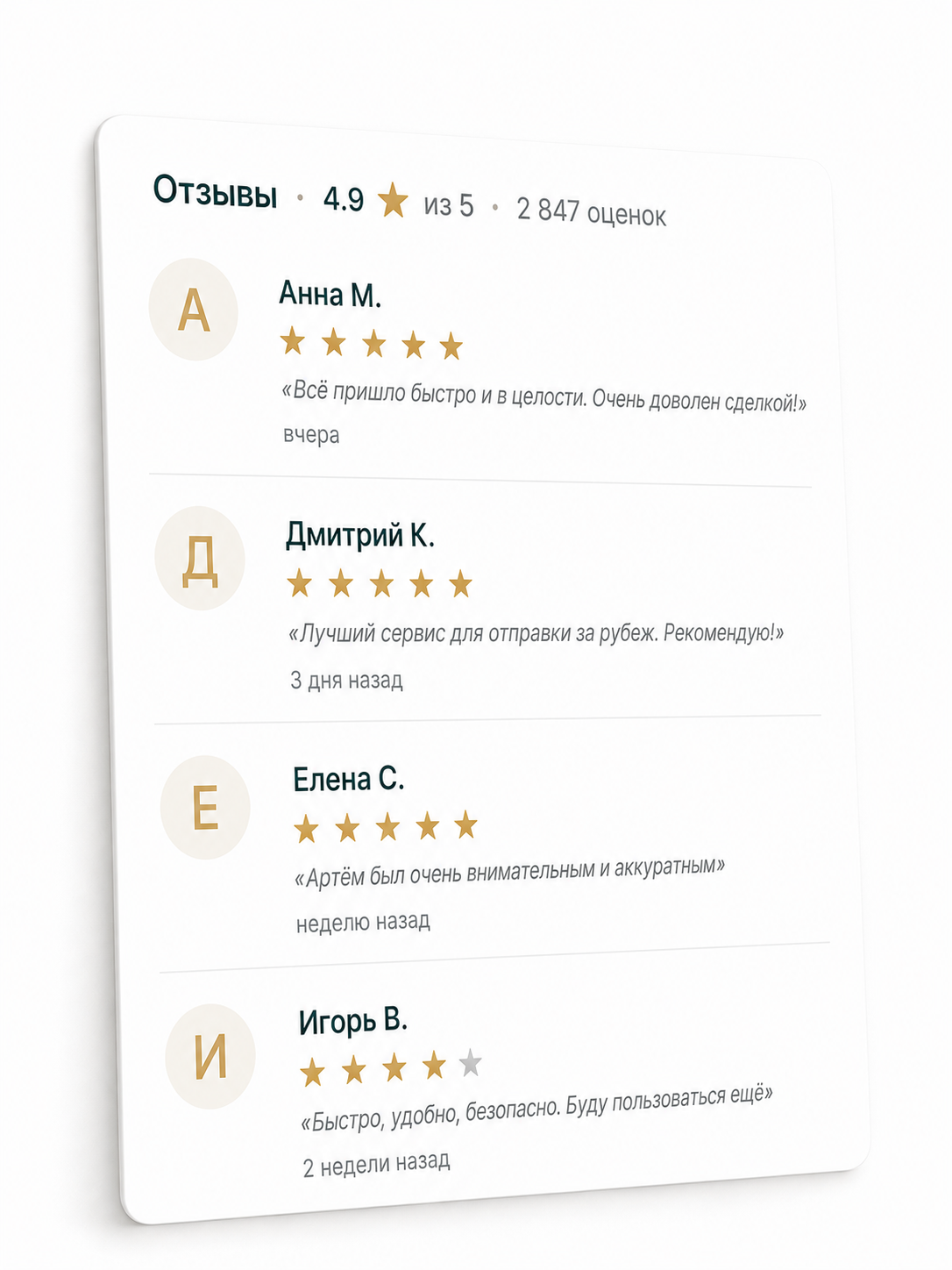
After every deal both sides leave a rating. A profile with a low rating loses access to requests.
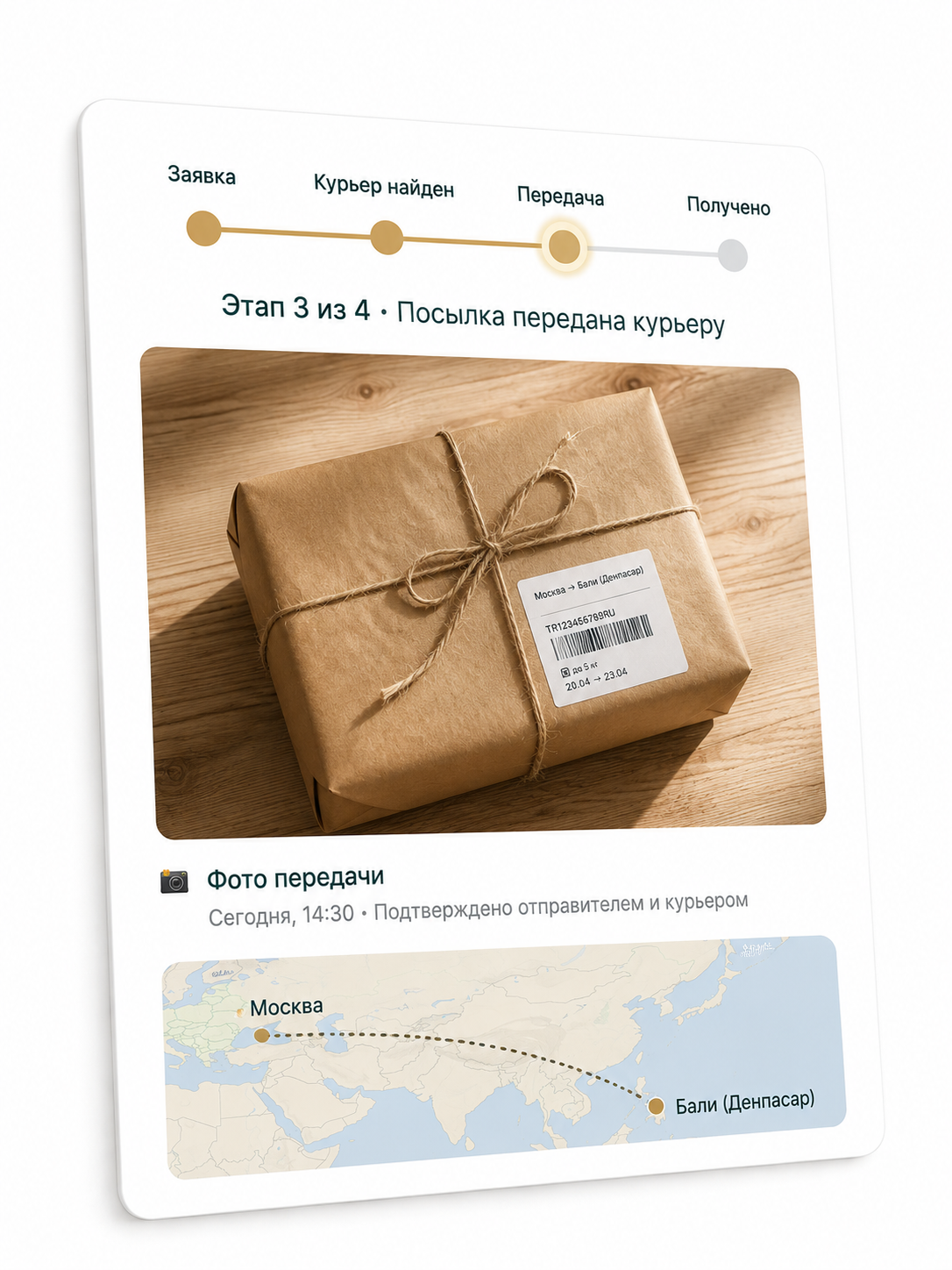
Every step — packing photo, handover, receipt — is recorded in the app. Nothing goes missing without a trace.
Advertising in the Trely ecosystem
110,000+ potential customers for your business. Expats and travellers are the highest-spending audience, looking for your services right now.
3 minutes to create a request — and travellers start responding. KYC, ratings, chat, 24/7 support.