Send belongings and luggage to another city with a traveller
You can send a suitcase, bag or box to another city without courier services or transport companies.
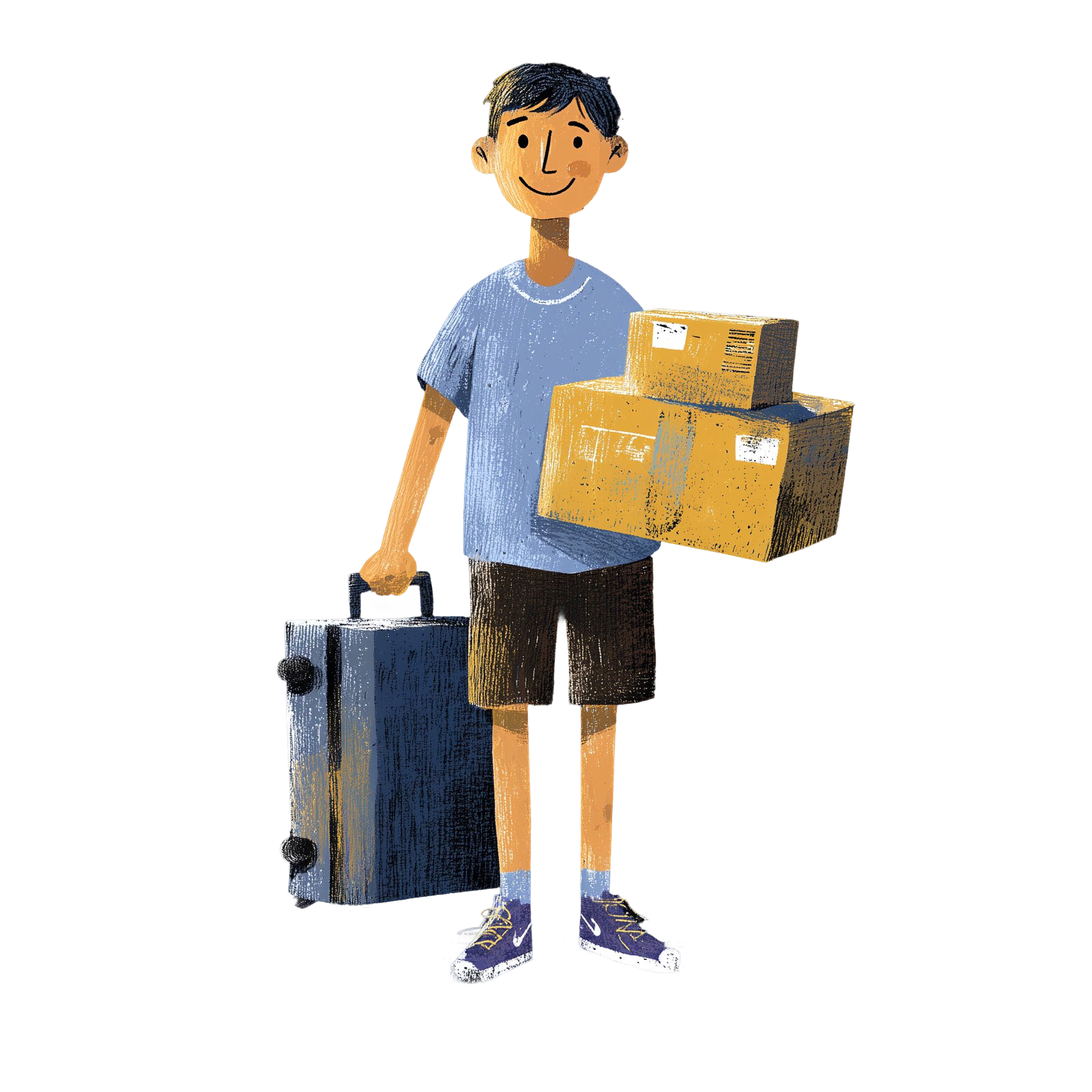
You can send a suitcase, bag or box to another city without courier services or transport companies.
A popular alternative is to send your belongings with someone already heading in the right direction by train, coach or plane. This kind of luggage delivery is especially handy when you need to pass things on quickly, without unnecessary formalities and at a reasonable price.
Transporting personal belongings through intermediaries has long been a logistics segment of its own. Travellers take the sender's cargo with them, and the recipient collects it in person when they meet. This is especially relevant for flights, where every extra kilogram of baggage turns into an additional expense.
This kind of delivery suits several typical situations where standard logistics solutions are excessive or too expensive.
When moving house, people often send some of their belongings ahead or in batches. Freight transport makes sense for furniture and large appliances, but individual bags and suitcases of clothes, books or household odds and ends are cheaper to send with a traveller. That way the recipient gets the items faster and the sender spends less.
Parents, children, brothers and sisters often live in different cities. Sending a suitcase of food, clothes or documents through someone you know is common practice. The route matches, you arrange the meeting in advance, and the delivery happens without extra intermediaries.
Students who have moved to another city to study need parcels from home from time to time. Delivery with a traveller lets you send a box of food, household items or clothes without going through a logistics company. Delivery times are often shorter than with standard carriers.
Documents, product samples, a small consignment — all of this can be passed on through someone travelling to the right city on business. It is particularly convenient when the route and flight match and there is little time to organise things. This method works for the informal handover of samples when red tape is not a priority.
Air travel in Russia and abroad is built on strict control of baggage weight and dimensions. Most airlines include one piece in the fare — usually up to 20–23 kg. Airlines charge separately for extra kilograms, and excess baggage fees can be considerably higher than the ticket itself on short routes.
Sending a suitcase with a passenger solves this problem differently. A traveller with spare weight allowance takes your cargo within their own limit. The sender pays the traveller for the service — and the total cost often turns out lower than the excess baggage charge at the airline desk.
Bear in mind that this option works when the weight and size of the items fit within the limits of the specific flight or route. Before sending a suitcase, it is worth checking the passenger's actual spare allowance.
Sending belongings involves several consecutive stages. Each one matters for the cargo to reach the recipient without complications.
The sender posts a request on the platform, specifying the route, type of cargo, preferred timeframe and handover address. People travelling in the matching direction respond to the request.
The sender and the traveller discuss the details: the meeting point, time, packing method and price of delivery. At this stage it is important to record all the arrangements — on the platform or in your messages. The more precisely the route is agreed, the fewer the risks at handover.
At the agreed time, the traveller meets the sender to collect the cargo. The meeting place is usually near the terminal, a railway station or on neutral ground. The sender hands over the suitcase, bag or box in person — this matters to both sides.
On arrival in the destination city, the traveller meets the recipient and hands over the cargo in person. The recipient checks the contents and confirms receipt. The delivery is then considered complete.
There is no single rate for sending belongings with a traveller. The traveller and the sender set the price themselves. The cost may depend on:
A small bag or box will cost less than a full-size suitcase. The traveller considers how much space and weight the item will take up relative to their own allowance.
The distance between cities, the availability of flights and the popularity of the route all affect the final price. On busy routes — for example, between major cities — there are more offers, and competition between travellers keeps the price of the service reasonable.
If the belongings need to be delivered within a day or two, finding a suitable traveller is harder. An urgent delivery may cost more than one with a flexible timeframe of several days.
As a rule, sending belongings to another city with a traveller costs less than standard transport through a logistics company — especially for small volumes and short timeframes.
Both options solve the task of sending belongings to another city, but they differ fundamentally. The choice depends on the volume of cargo, urgency and what is convenient in your particular situation.
| Criterion | Traveller | Transport company |
|---|---|---|
| Price | Lower, especially for small volumes. | Higher, fixed rates. |
| Speed | Faster — on the traveller's departure day. | Standard timeframes, depending on the schedule. |
| Receipt | In person, at a meeting. | Via a warehouse or pick-up point. |
| Convenience | Flexible arrangement of terms. | Limited — by company regulations. |
| Reliability | Depends on the traveller's reputation. | Guaranteed by contract. |
| Cargo volume | Small items, suitcases. | Suitable for large and heavy cargo. |
A transport company makes sense for bulky cargo, valuables that require insurance, or regular shipments of commercial consignments. A traveller wins where speed, personal contact and the price of delivery matter.
Placing a request on the platform takes a few minutes and requires no special knowledge.
Create an account on the service. For the sender and the recipient this is a standard procedure — name, contact details, phone number verification.
Enter the departure city and destination city, the type of cargo (suitcase, bag, box), approximate weight and dimensions, and your preferred delivery timeframe. The more precise the description, the faster suitable travellers will respond.
The platform shows available travellers on your route. Check their profiles, ratings and reviews — this will help you choose a reliable one. Contact the traveller directly via the service's chat.
Discuss the meeting place for the handover, the exact time, and the packing and labelling requirements. Record the arrangements within the platform.
Meet the traveller at the agreed place, hand over your belongings and confirm the handover in the app. You pay for the service through the platform — this protects both sides.
The recipient meets the traveller on arrival. After the handover, they confirm receipt in the service. The request is closed.
Yes. You can send a suitcase if its weight and dimensions fit within the limits for the route — especially when flying — and if the terms have been agreed with the traveller in advance. When travelling by train or coach, restrictions are usually more relaxed.
Use a suitcase, bag or box with a secure fastening or tape. Be sure to label the package with the recipient's name and contact phone number. If there are fragile items inside, add protective material and mark the package accordingly. The traveller is responsible for keeping the items safe in transit, so the better the packing, the lower the risk.
The handover happens in person: the sender hands the cargo to the traveller, who passes it to the recipient when they meet. The platform records every stage and acts as the guarantor of the arrangements. The traveller has the right (and the duty) to check the contents of the bag so as not to carry items prohibited by law.
A personal handover is mandatory. The sender meets the traveller before departure, and the recipient meets them after arrival. This rules out anonymity and reduces the risks for everyone involved.
Contact the service's support team. The platform keeps the message history and request details, which makes it possible to resolve a dispute quickly.
ID verification, escrow payment, user ratings and photo records of every step — four mechanisms that make a deal safe and predictable.
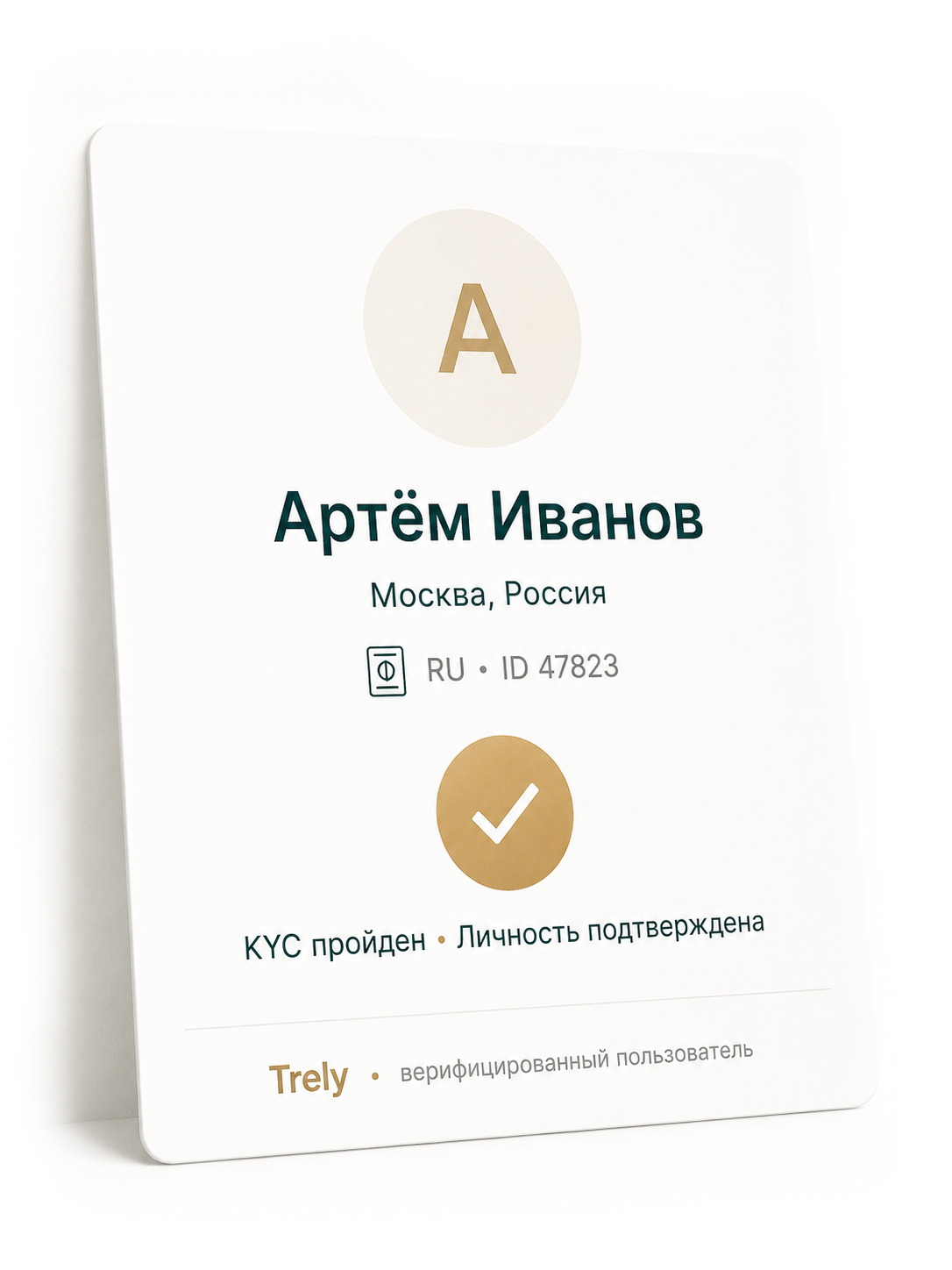
Every user passes a document check and face verification. We have no anonymous profiles.
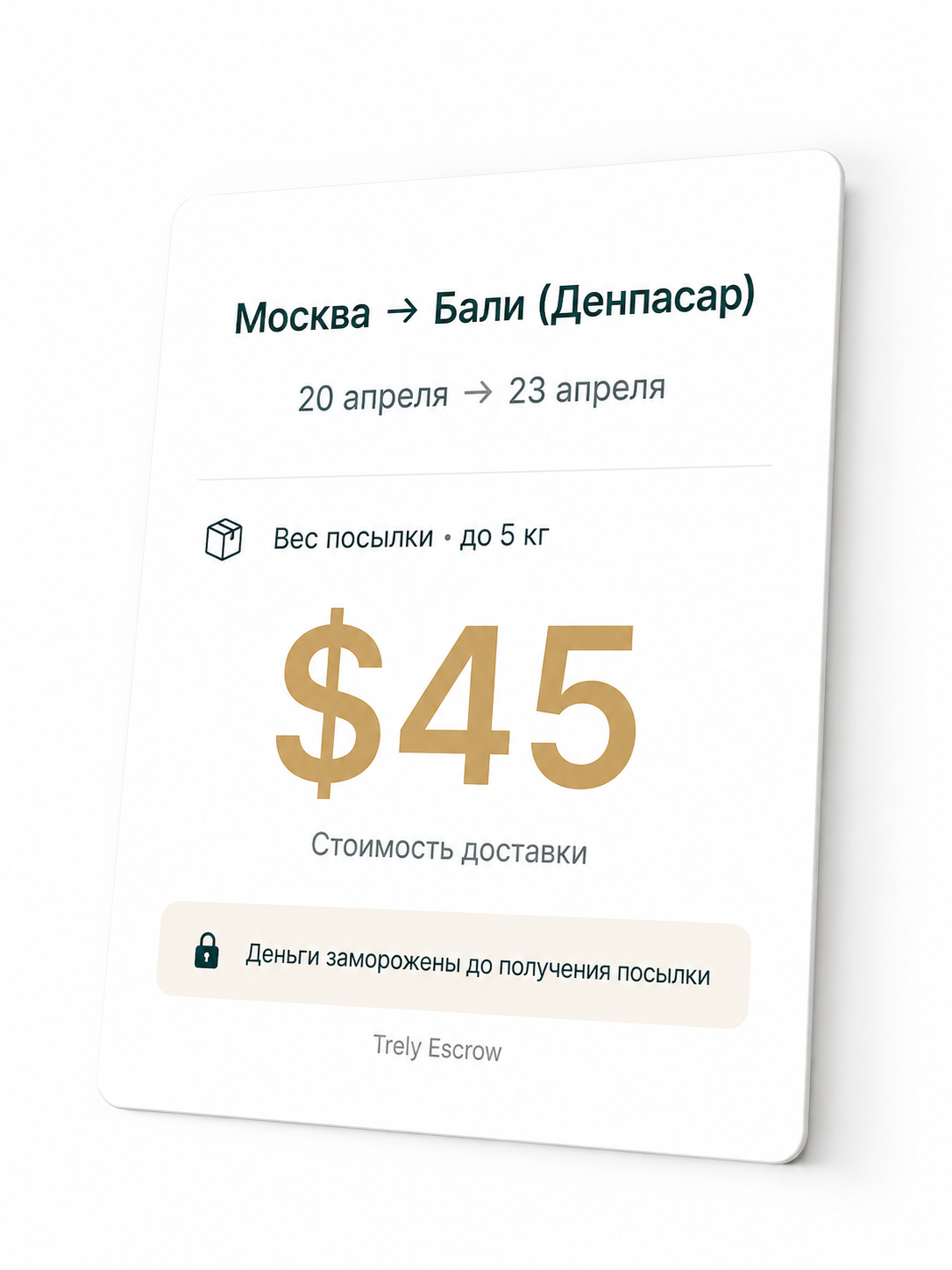
The sender's money is held by Trely and released to the traveller only after delivery is confirmed.
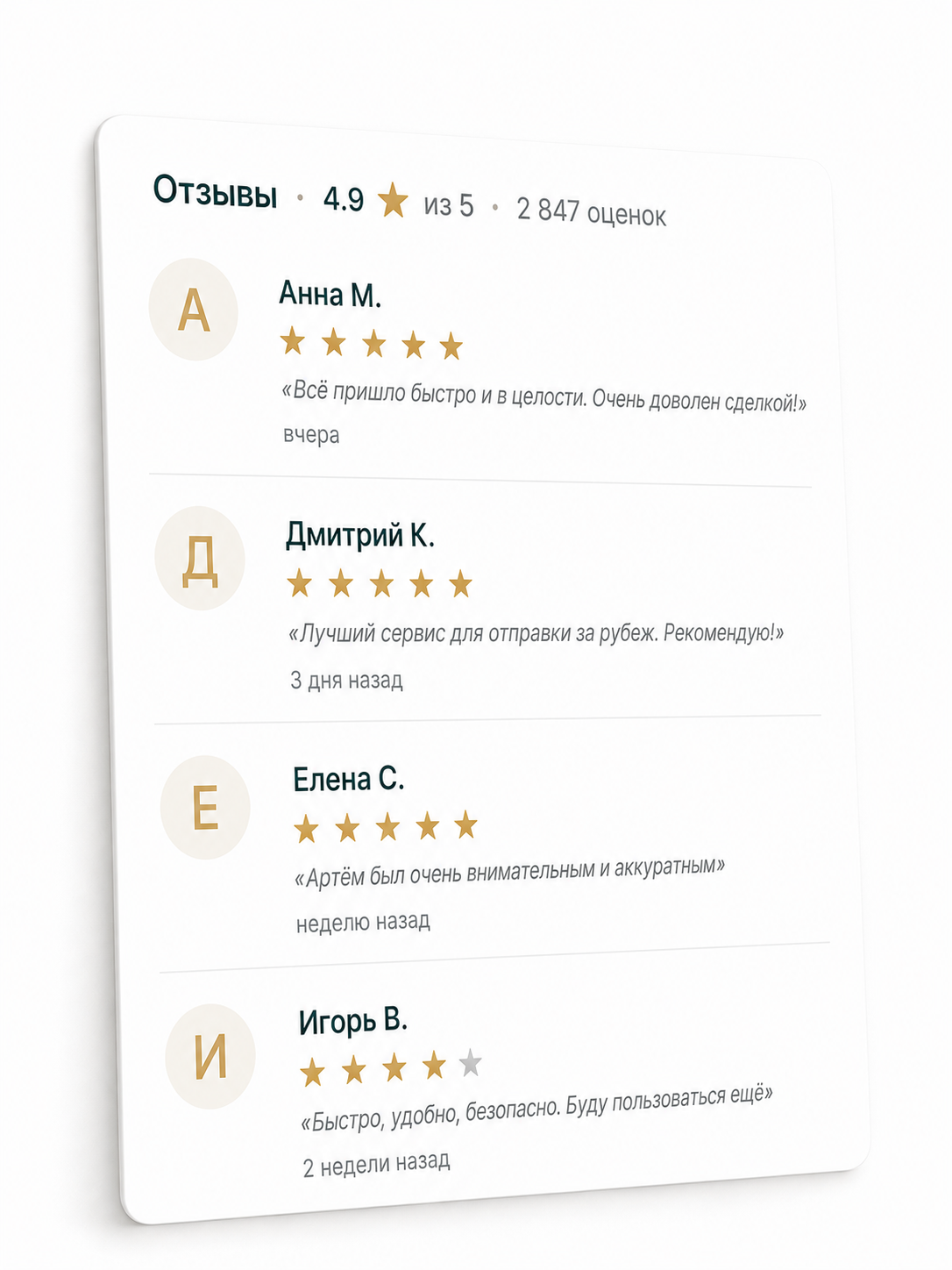
After every deal both sides leave a rating. A profile with a low rating loses access to requests.
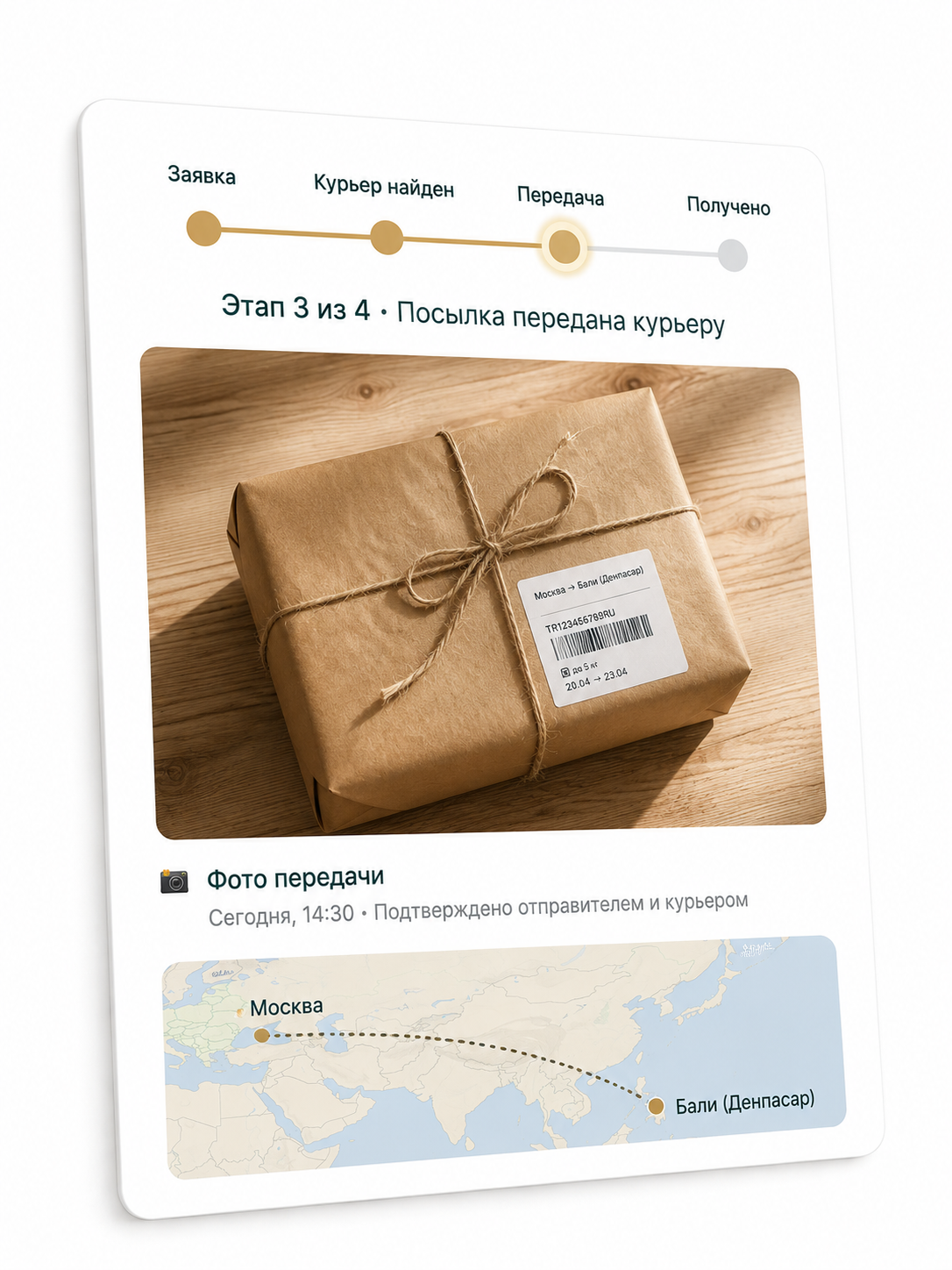
Every step — packing photo, handover, receipt — is recorded in the app. Nothing goes missing without a trace.
Advertising in the Trely ecosystem
110,000+ potential customers for your business. Expats and travellers are the highest-spending audience, looking for your services right now.
3 minutes to create a request — and travellers start responding. KYC, ratings, chat, 24/7 support.