Sending international parcels with travellers
How do you send a parcel abroad? Using the regular post means spending time on queues, paperwork and waiting.

How do you send a parcel abroad? Using the regular post means spending time on queues, paperwork and waiting.
There is an alternative: p2p (person-to-person) delivery via travellers. Someone flying in the right direction takes the item in their luggage and hands it to the recipient in person. It is faster, cheaper and simpler than most standard international parcel delivery methods.
We have built a simple process. The sender visits the platform, posts a request and specifies the route: from where, to where and the preferred dates, then picks a traveller flying in exactly that direction — matched by flight or transit hub. Next, the two sides agree on the terms. They discuss the place and time of the handover of the box or bag, the size of the reward and the route details.
The traveller takes the item in their personal luggage — like any ordinary thing they carry with them. On arrival, they meet the recipient in person. No post offices, terminals or queues. Handover takes a few minutes — the item passes directly from hand to hand.
This format is especially convenient when you need to send an international parcel quickly without unnecessary red tape. The traveller receives compensation for the delivery, and the sender gets a predictable handover time and a specific person to entrust the parcel to. Importantly, you communicate directly: you can clarify details, agree on packaging and arrange the meeting place in the destination city in advance.
Travellers carry items that fit easily into hand luggage or checked baggage. The main condition is that the item must be permitted for export and must not raise questions at customs control. What people usually send:
of goods for personal use
Items that require special paperwork, certificates or veterinary documents are better sent through official channels. The traveller carries the cargo as personal luggage, so the contents should look the part.
International parcel delivery from Russia via travellers covers most of the popular destinations. Regular flights and a steady flow of passengers provide good coverage:
Belarus, Kazakhstan, Armenia, Azerbaijan — destinations with frequent flights and steady demand for parcel forwarding. Customs procedures between a number of these countries are simplified, which speeds up handover. Sending international parcels to CIS countries is one of the most affordable options.
One of the busiest routes. Planes from Moscow, Saint Petersburg and other cities fly daily, so finding a traveller to Istanbul or Antalya is easy. Demand for parcel forwarding is consistently high — many people use this route to send personal belongings to relatives and friends.
Dubai and Abu Dhabi are popular destinations among business travellers. High passenger traffic makes this one of the most accessible routes for p2p delivery.
Tbilisi receives regular flights from most major Russian cities. The destination is popular both with tourists and with those who have relocated there permanently. Sending documents and personal belongings via travellers is especially in demand here.
Despite changes in logistics, flights via transit hubs continue. Delivery abroad from Russia to Germany, France, Spain and other countries is possible via travellers flying with connections. The route will take a little more time to search for a suitable traveller, but it is doable.
The traveller carries the item as part of their personal luggage. This places certain obligations on both sides:
Before the handover, make sure the item is permitted for export from Russia and for import into the destination country. Declarations, weight and value limits, bans on certain categories of goods — all of this is governed by each country's customs legislation. Ignorance of the rules is no excuse.
The traveller has the right to inspect the contents of the box or bag before taking it on the trip. This is standard practice: a person must know exactly what they are carrying and take responsibility for the cargo in their luggage. The sender must provide full information about the contents and must not mislead the traveller.
The parcel must be intended for personal use — not for commercial resale. Use secure packaging. Include the recipient's contact details and the sender's details, which will help avoid questions at customs control.
Bear in mind that every country sets its own duty-free import allowances. If the value or weight of the item exceeds the set threshold, the recipient may need to pay duty. This is worth discussing in advance to avoid misunderstandings.
The rate for delivery via a traveller is made up of several components. There is no single fixed rate — the final cost depends on the terms of each specific deal:
The farther the destination and the less often passengers fly there, the higher the traveller's reward. Popular destinations — Turkey, the UAE, CIS countries — usually cost less than rare or transit routes.
A small envelope with documents and a large box are fundamentally different requests. The traveller is limited by the airline's baggage allowance, so the size of the cargo directly affects the price and availability of the service.
If the parcel is needed on a specific day, the choice of travellers narrows. Urgency usually costs extra — either you agree to a higher reward or you search for longer.
The final cost of p2p delivery turns out lower than that of traditional postal services or courier companies — especially on short and medium routes.
##
| Criterion | Traveller | Postal services |
|---|---|---|
| Cost | Lower. | Higher. |
| Speed | Often faster. | Standard delivery times. |
| Receipt | In person, hand to hand. | Via a post office or courier. |
| Queues and paperwork | None. | Paperwork required. |
| Route flexibility | High. | Limited. |
| Transparency | Direct communication. | Impersonal system. |
Traditional logistics wins where formal documentation matters: insurance, commercial invoices, official proof of delivery. For personal items and small parcels, p2p delivery often proves more practical — especially when time is tight and the route is non-standard.
The main condition is that the item must comply with carriage rules and be intended for personal use, not commercial purposes. The contents must not be on the list of items banned from export.
Handover is possible if the medicine is permitted for import into the destination country. Prescription medicines generally require a prescription and may be limited in quantity. Some medicines are on the list of items banned from import in particular countries — before sending, check the customs regulations of the recipient's country.
Platforms for p2p delivery generally provide a review system and user verification. Before agreeing on a handover, check the traveller's reputation, record the arrangements in writing in your messages and agree on a specific meeting place with the recipient in advance.
A flight may be delayed and a route may change. It is worth discussing such situations in advance: agree on a backup way to get in touch and clarify what to do in case of force majeure. Most platforms recommend recording all handover terms in the chat before meeting.
ID verification, escrow payment, user ratings and photo records of every step — four mechanisms that make a deal safe and predictable.
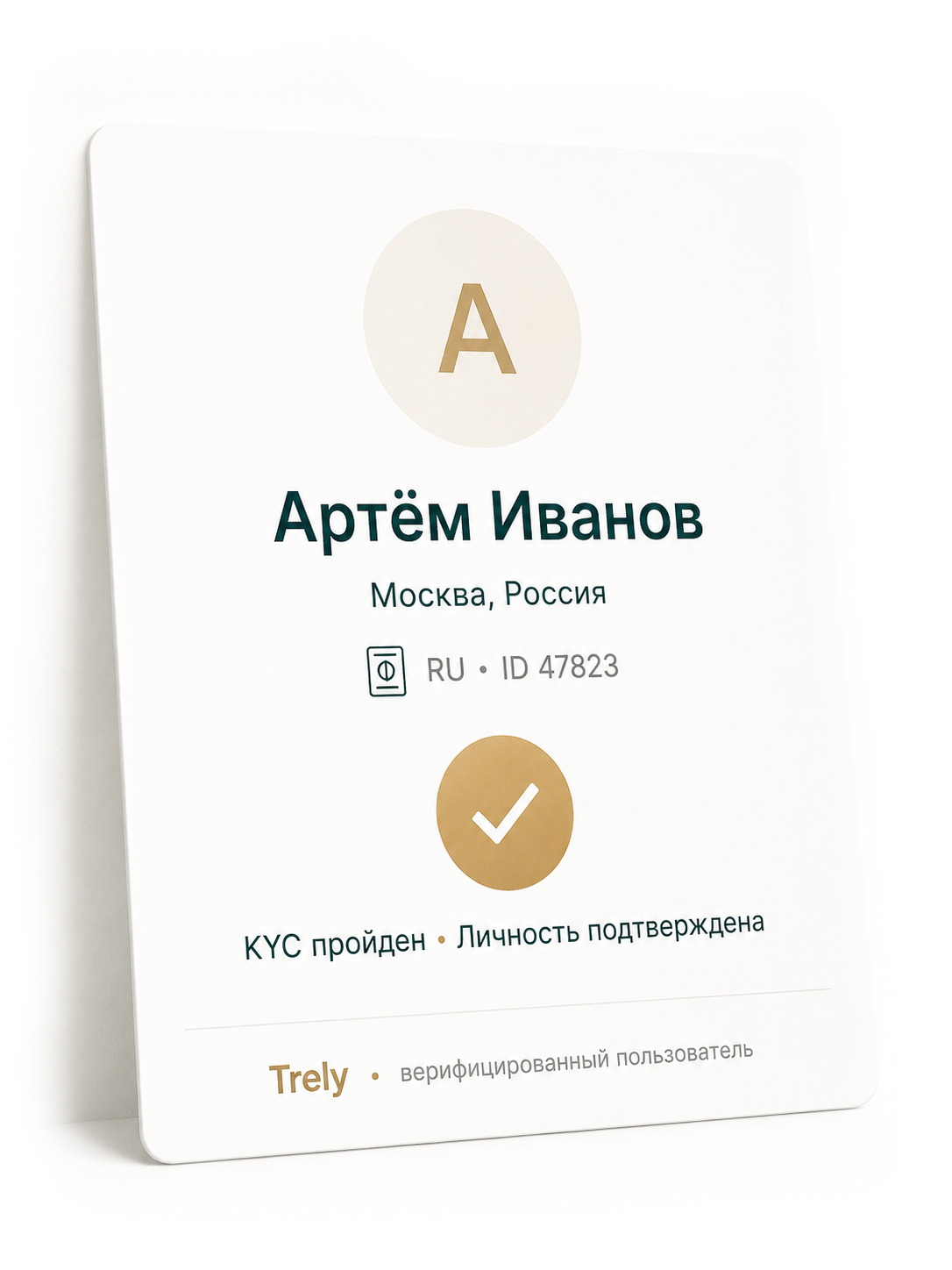
Every user passes a document check and face verification. We have no anonymous profiles.
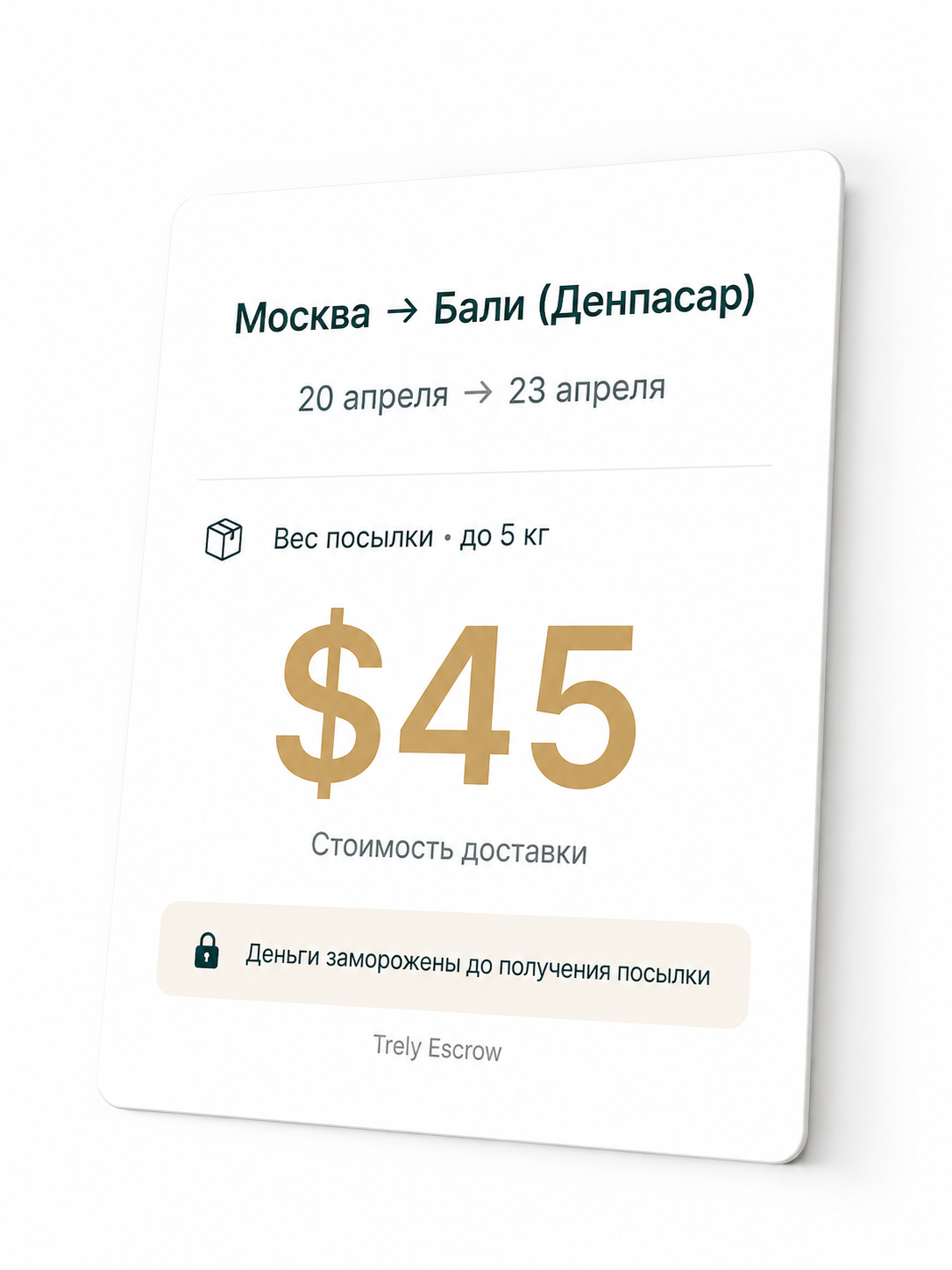
The sender's money is held by Trely and released to the traveller only after delivery is confirmed.
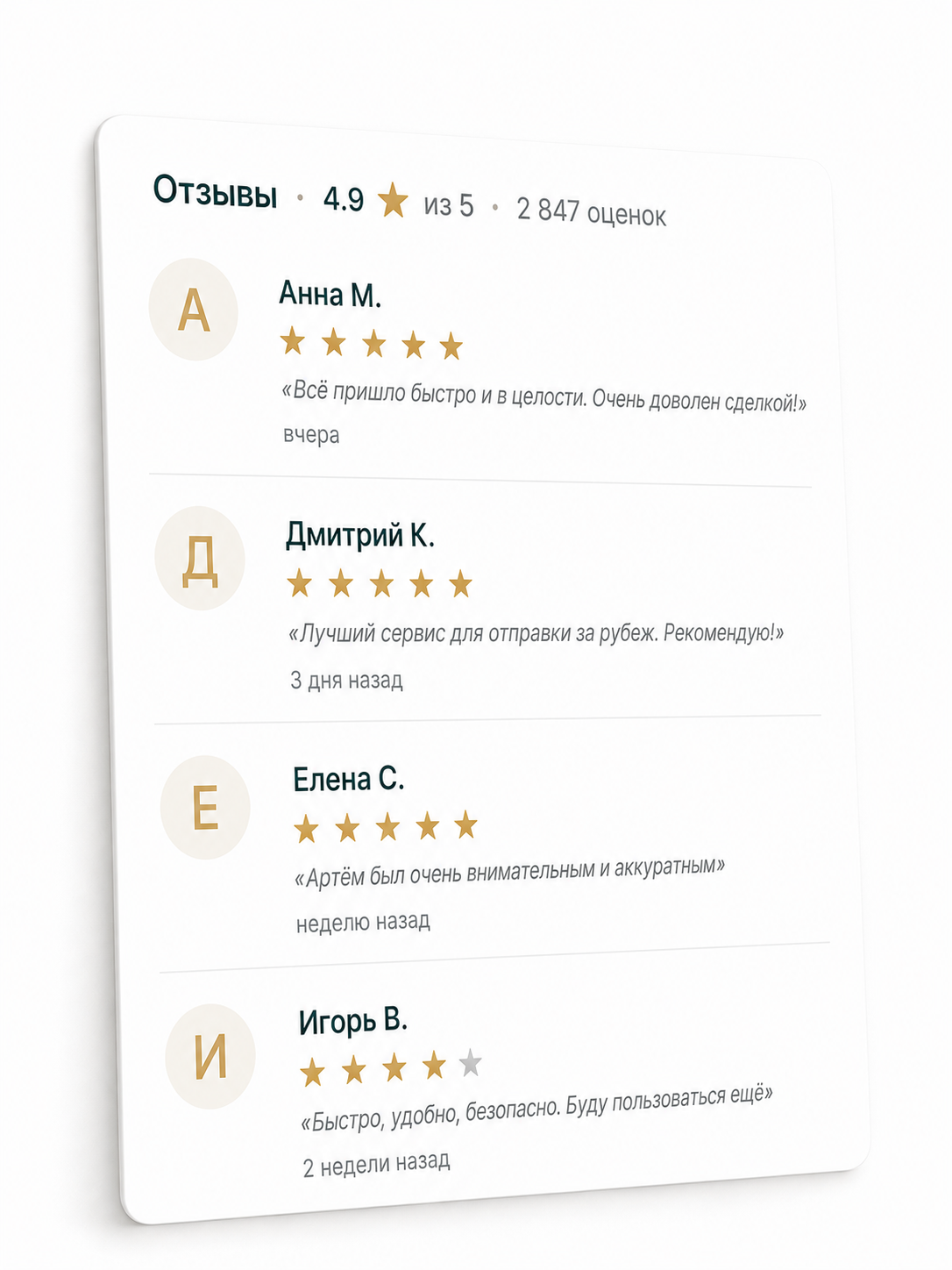
After every deal both sides leave a rating. A profile with a low rating loses access to requests.
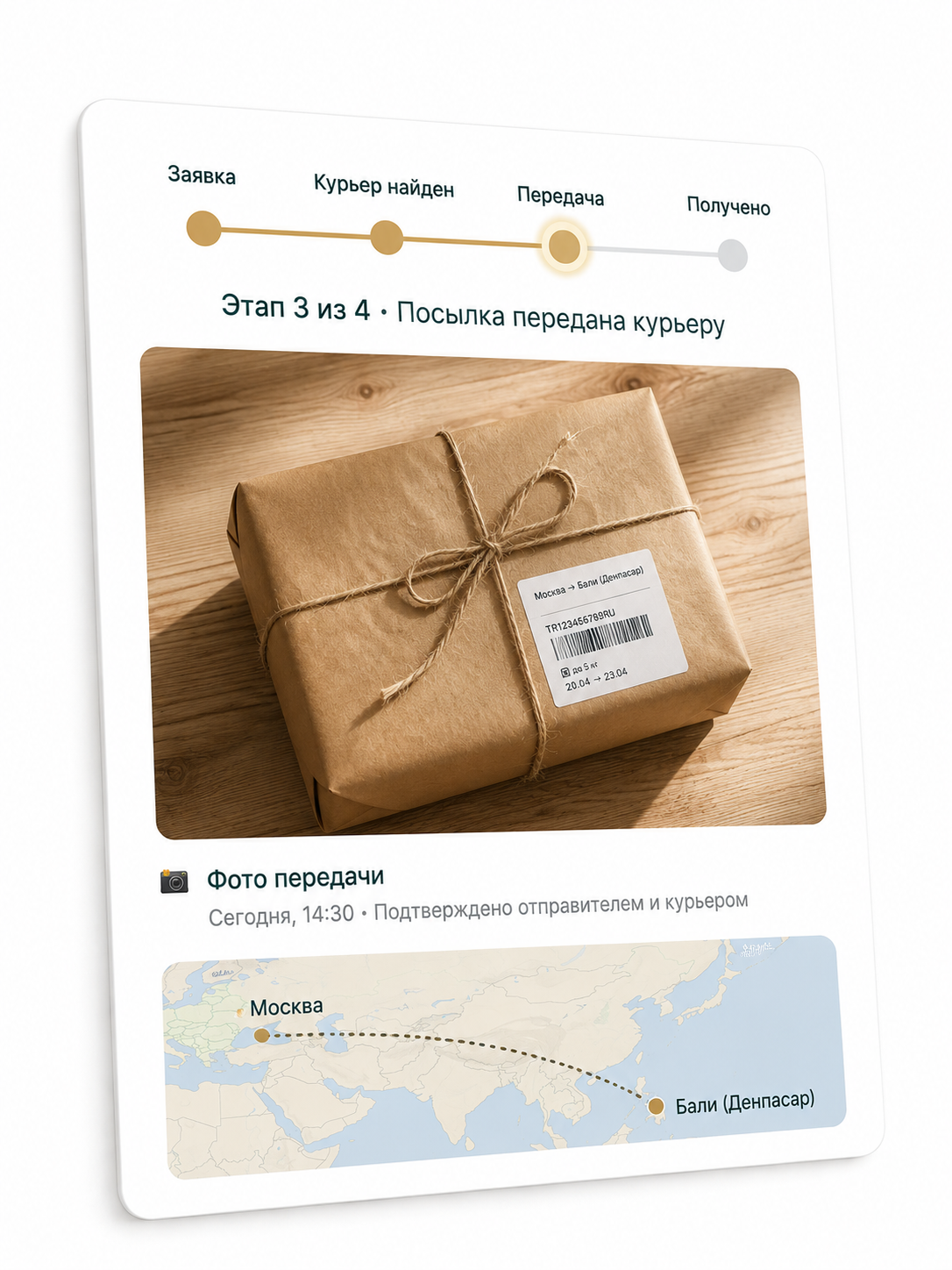
Every step — packing photo, handover, receipt — is recorded in the app. Nothing goes missing without a trace.
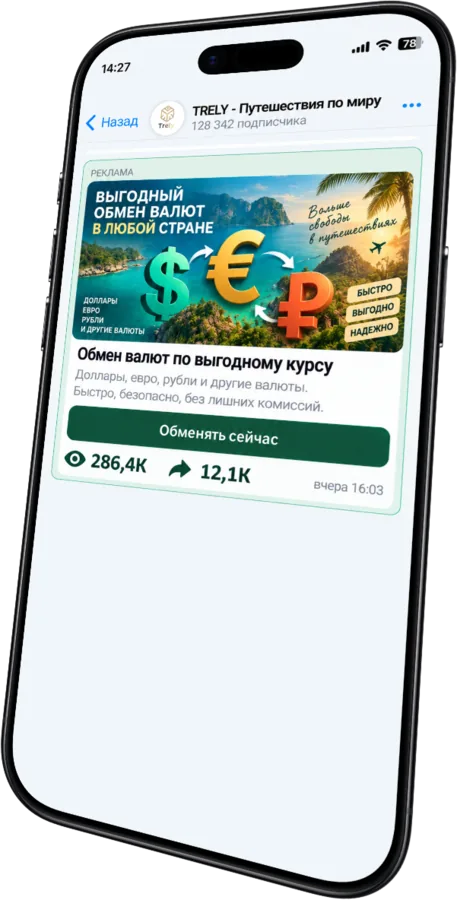
Advertising in the Trely ecosystem
110,000+ potential customers for your business. Expats and travellers are the highest-spending audience, looking for your services right now.
3 minutes to create a request — and travellers start responding. KYC, ratings, chat, 24/7 support.